Strategies influencing growth and development

Written by: Umar Bostan
Updated on30 October 2026
Strategies Influencing Growth and Development
Market-orientated strategies rely more heavily on market forces and the profit motive. Interventionist strategies involve greater government involvement to correct market failures and promote development.
Market-Orientated Strategies
Trade Liberalisation
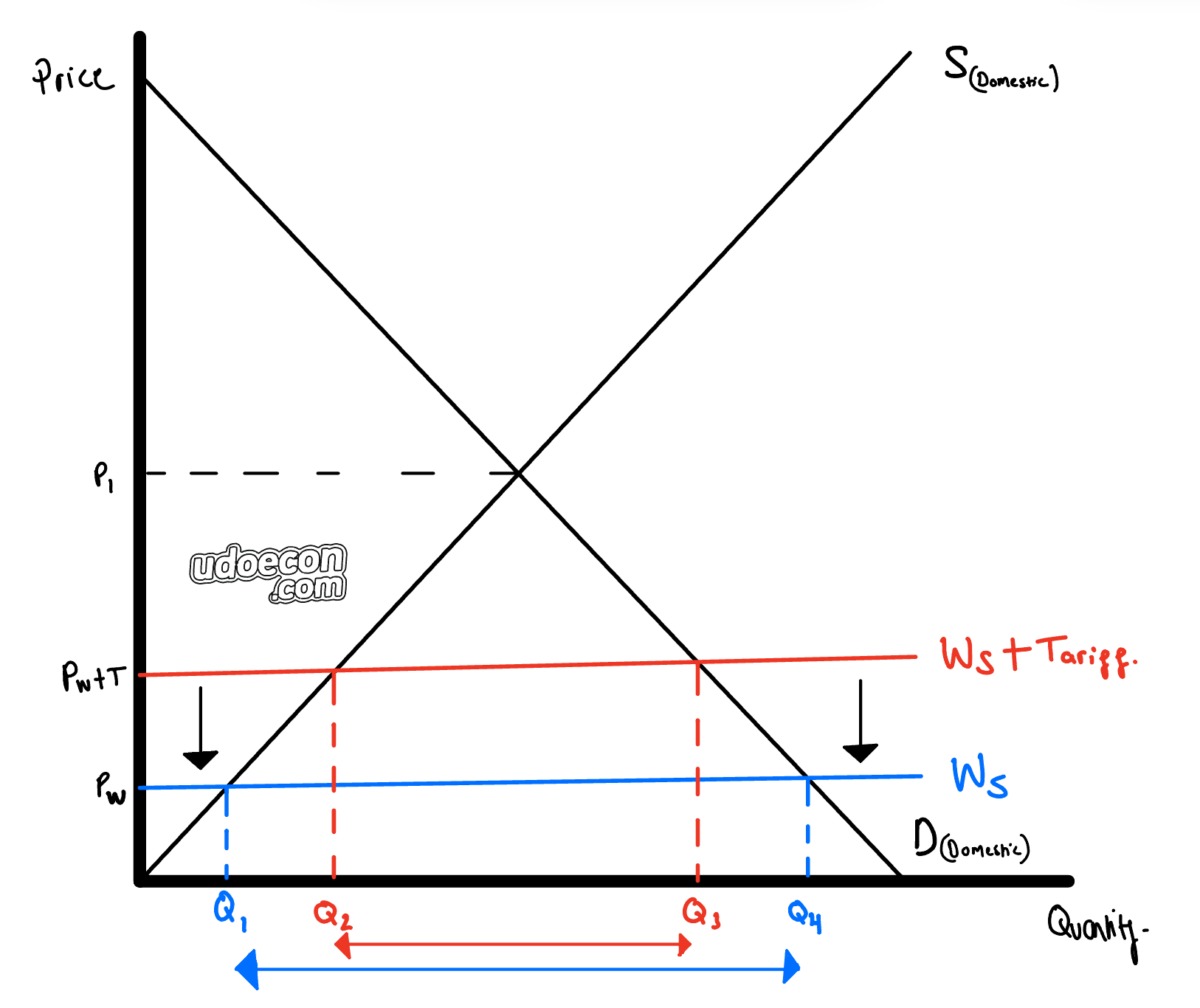
Trade liberalisation involves reducing or removing protectionist barriers, such as tariffs ,allowing countries to trade more freely.
Greater free trade allows countries to specialise according to their comparative advantage.
Trade barriers fall → exports and trade increase → firms expand production → employment and incomes rise → AD increases → economic growth increases.
Greater competition from foreign firms can also force domestic firms to reduce costs and become more efficient.
However, domestic firms may struggle to compete with larger or more efficient foreign firms. Firms may close → unemployment rises → growth and development may be limited.
Therefore, the effectiveness of trade liberalisation depends on how internationally competitive domestic firms are.
Promotion of Foreign Direct Investment
Promoting FDI → Increased FDI → investment increases → productive capacity rises → LRAS shifts right → potential economic growth increases.
FDI can also:
Create employment
Increase incomes
Increase labour productivity
Help overcome the savings gap
Higher employment and incomes can also increase consumption and AD, creating a multiplier effect.
For example Costa Rica attracted FDI from tech giant Intel via major tax incentives and other benefits .
However, multinational firms may repatriate profits to their home country, meaning less income remains within the developing economy. For example despite Nigerias billion dollar oil and gas sector with major players like Shell and Chevron , this is historically repatriated back into the EU and US .
Therefore, FDI is more beneficial when a large proportion of its benefits remain within the domestic economy.
Removal of Government Subsidies
Governments may subsidise industries to reduce their costs of production. A market-orientated approach involves reducing or removing these subsidies.
Subsidies can distort price signals and prevent the market mechanism from allocating resources efficiently.
Subsidy removal → inefficient firms face greater competition → firms reduce costs and improve productivity → resources are allocated more efficiently → economic growth may increase.
Removing subsidies also reduces government expenditure, potentially improving the government budget.
Floating Exchange Rate System
Under a floating exchange rate system, the value of a currency is determined by the forces of supply and demand with little direct government intervention.
This removes the need for governments to maintain large reserves of foreign currency to defend a particular exchange rate.
An appreciation may reduce the price of imported raw materials → firms’ production costs fall → profits and investment may increase → productive capacity increases.
However, floating exchange rates can be volatile. Large fluctuations create uncertainty for exporters and importers, making international trade and investment more difficult.
Microfinance
Microfinance provides small loans to individuals who would normally struggle to access traditional banking services.
Microfinance → entrepreneurs gain access to finance → businesses are established or expanded → employment and incomes rise → consumption increases → multiplier effect → economic growth increases.
It can help overcome the savings gap .
Microfinance has been particularly successful in countries such as Bangladesh, where it has been used to help households escape the poverty cycle.
For example over 80% of microfinance clients are women .
Privatisation
Privatisation is the transfer of assets or businesses from the public sector to the private sector.
Private firms operate with a profit motive, giving them a greater incentive to reduce costs and improve efficiency.
Privatisation → greater competition and profit incentive → efficiency and productivity increase → costs fall → output and profits rise → economic growth increases.
Interventionist Strategies
Interventionist strategies involve the government actively intervening in markets to influence economic growth and development.
Development of Human Capital
Human capital refers to the skills, knowledge, education and abilities of workers.
Governments can develop human capital through spending on education, training and healthcare.
Better education and training → worker skills improve → labour productivity rises → firms produce more at lower unit costs → LRAS shifts right → potential economic growth increases.
A more skilled workforce can also allow an economy to move up the supply chain:
Primary products → manufactured goods → higher-value services.
Higher-value production can generate greater incomes than relying heavily on primary commodities. Education also directly improves quality of life, contributing to economic development.
Protectionism
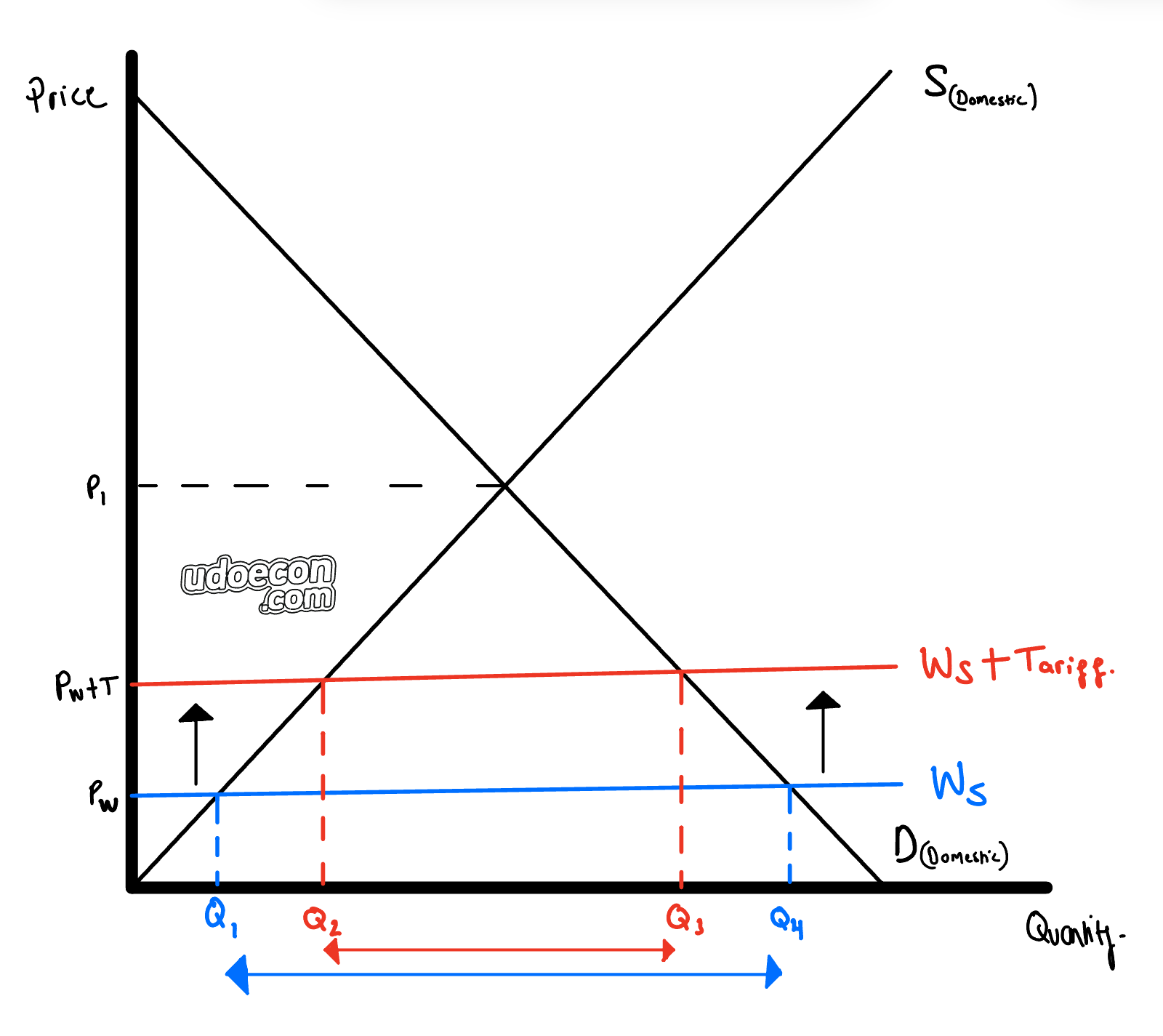
Protectionism involves government policies designed to restrict imports, such as tariffs and quotas.
Protectionism can protect infant industries while they grow and become internationally competitive.
Tariffs and quotas → imports become more expensive or restricted → demand switches towards domestic goods → domestic output increases → employment and incomes rise → economic growth increases.
Protectionism may also reduce a trade deficit by reducing imports.
Managed Exchange Rates
The exchange rate is mainly determined by the market, but the central bank intervenes by buying and selling currencies.
For an export-led developing economy:
Export growth → demand for currency rises → currency appreciates → exports become more expensive → export growth slows.
Government intervention can limit this appreciation.
Prevent appreciation → exports remain internationally competitive → export demand remains high → employment and incomes continue rising → economic growth increases.
For example China operate a managed exchange rate to make sure Chinese firms exports maintain competitive prices on global markets .
Infrastructure Development
Better infrastructure → transport and production costs fall → productivity and profitability increase → domestic investment and FDI rise → productive capacity increases → economic growth increases.
Joint Ventures
A joint venture occurs when firms from different countries form a partnership.
This allows domestic firms to benefit from foreign investment, technology and expertise while ensuring some ownership and profits remain within the domestic economy.
Joint venture → foreign capital and expertise enter the economy → domestic firms access new markets → output and trade increase → employment and incomes rise → growth and development increase.
Joint ventures can also spread the financial risks involved in developing new products.
For example, Tata Starbucks allowed Starbucks to enter the Indian market through a partnership with Tata.
Compared with conventional FDI, joint ventures may reduce problems such as exploitation and profit repatriation because part of the business remains domestically owned.
Buffer Stock Schemes
Buffer Stock Schemes
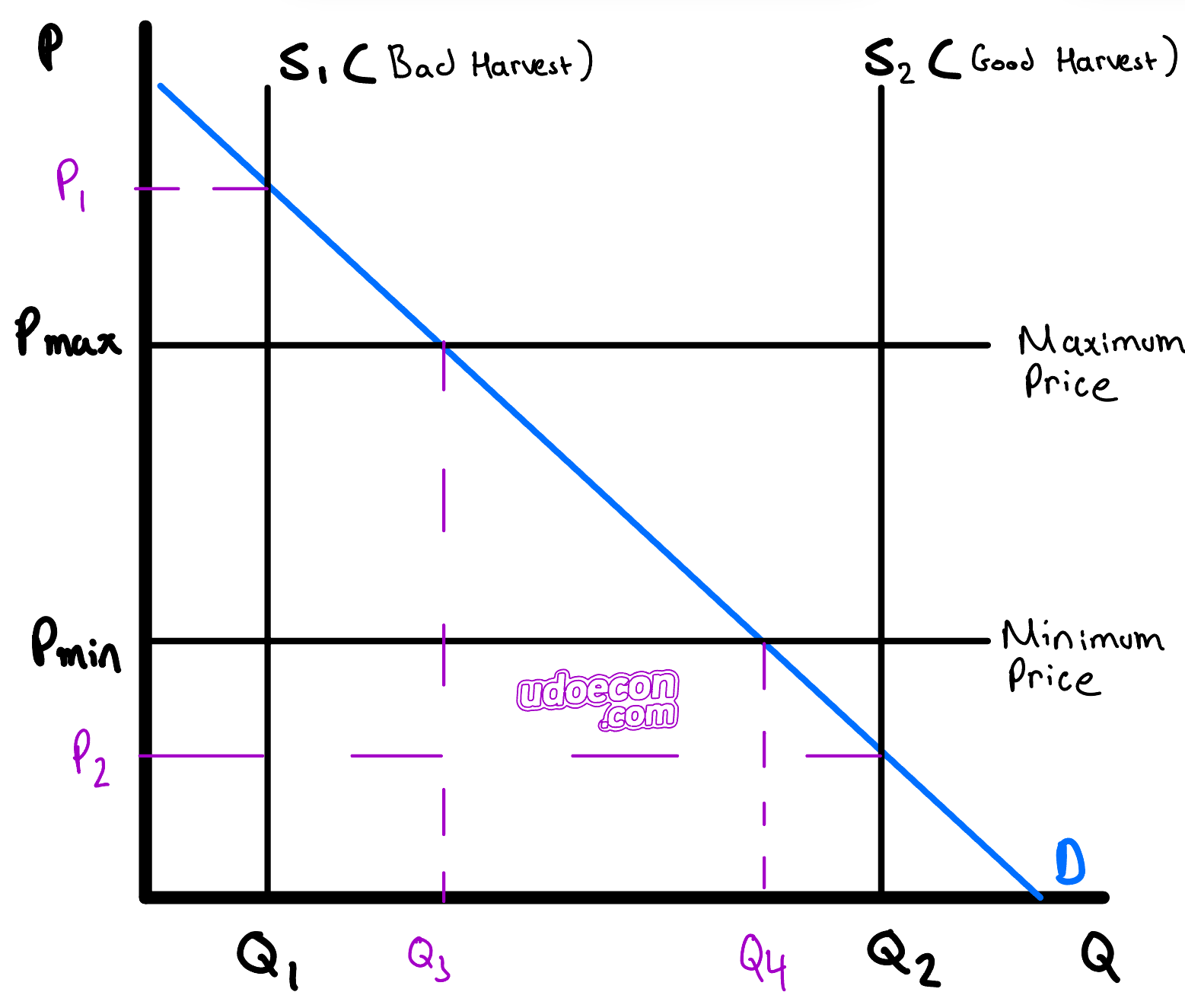
A buffer stock scheme is used to reduce commodity price volatility by keeping prices between a minimum price (Pmin) and a maximum price (Pmax).
Good Harvest – Price Falls
In the diagram, a good harvest increases supply from S₁ to S₂. Without intervention, the market price would fall from to P₂ because there is an abundant amount of agricultural output available.
The government prevents the price falling below Pmin by buying the surplus output between Q₄ and Q₂ and placing it into storage.
Government buys surplus → market supply falls → price is supported at Pmin → farmers’ incomes are protected.
Bad Harvest – Price Rises
During a bad harvest, supply is lower at S₁. Without intervention, the market price would rise to P₁, potentially making essential commodities unaffordable hurting domestic households purchasing power.
The government therefore releases previously stored stocks onto the market to prevent the price rising above Pmax.
Government sells buffer stocks → market supply increases → upward pressure on prices falls → price is kept around Pmax.
Benefits
Keeping prices between Pmin and Pmax makes farmers’ incomes more predictable.
Stable prices → lower uncertainty → farmers more willing to invest → higher productivity and agricultural development.
Consumers also benefit because releasing stocks during poor harvests prevents commodity prices from rising excessively.
However:
Buying surplus stocks is expensive
Storage and transport are costly
Agricultural products may perish
Administration is difficult
Governments may lack sufficient funds
Guaranteed government purchases can also encourage overproduction, as producers know the government will purchase excess supply.
Other Strategies for Growth and Development
The effectiveness of development strategies depends on the circumstances of the country. A policy that works in one developing economy may be less effective in another.
Industrialisation and the Lewis Model
The Lewis Model explains how a developing economy can move from agriculture towards manufacturing.
It divides the economy into:
Rural agricultural sector
Urban manufacturing sector
How the Lewis Model Works
Manufacturing has higher productivity and wages → workers migrate from rural areas to cities → manufacturing output and profits rise → profits are reinvested → more jobs are created → further migration → industrialisation and economic growth.
Moving workers from low-productivity agriculture to higher-productivity manufacturing increases overall productivity, incomes and potentially living standards.
For example, South Korea experienced significant rural-to-urban migration during its industrialisation.
Migration continues while there is surplus labour in agriculture. Eventually, agricultural labour becomes scarcer → agricultural wages rise → the wage gap with manufacturing falls → migration slows or stops.
Development of Tourism
Tourism is effectively an export because foreign tourists purchase domestically produced services.
Tourism increases → exports rise → AD shifts right → employment and incomes rise → consumption increases → multiplier effect → real GDP increases.
Countries with natural or cultural attractions may have a comparative advantage in tourism. For example, Saudi Arabia and the UAE have promoted tourism, while Croatia has used its Experience Croatia advertising campaign.
Development of Primary Industries
Some developing economies have a comparative advantage in primary commodities because of their natural resources.
Examples include:
Zambia — copper
Middle Eastern economies — oil
Ethiopia — coffee and cut flowers
Botswana — diamonds
Governments may support primary industries through subsidies, protectionism or other policies designed to expand production.
Primary production increases → exports rise → export revenue increases → firms’ profits and employment rise → household incomes increase → AD and economic growth increase.
Higher profits can also increase government tax revenue, providing more funds for education, healthcare and infrastructure. If the industry is state-owned, export revenue may flow directly to the government.
For example, diamonds account for around 90% of Botswana’s export revenues, with government revenues helping to finance services such as schools and hospitals.
Fairtrade Schemes
Fairtrade schemes aim to provide producers with fairer prices, better working conditions and greater income stability.
Higher and more stable incomes → uncertainty falls → farmers can plan and invest → spending on machinery and fertiliser increases → productivity and incomes may rise.
Aid
Aid is the transfer of resources to developing countries. It can include humanitarian assistance, grants, soft loans and funding for development projects.
Aid can help overcome the savings gap by providing finance for investment that may otherwise not occur.
Aid → investment in infrastructure, healthcare and education increases → human and physical capital improve → productivity rises → LRAS shifts right → long-run economic growth increases.
Debt Relief
Debt relief involves the partial or complete cancellation of a country’s debt. It can include temporarily cancelling interest payments or reducing the value of outstanding debt through a haircut.
Large debt repayments create an opportunity cost because government revenue used to service debt cannot also be spent on public services or investment.
Debt relief → debt repayments fall → government funds are freed up → spending on infrastructure, education and healthcare increases → productivity and living standards improve → economic growth and development increase.
For example, the IMF granted $4.5 billion of debt relief to Somalia. Somalia’s external debt fell from over 60% of GDP in 2018 to around 6% in 2023.
Limitations of Debt Relief
Debt relief may create moral hazard.
Debt is cancelled → government expects future debts may also be forgiven → incentive for fiscal discipline falls → government may borrow excessively again.
Debt relief may also make private lenders more cautious about lending to the country in the future, potentially leading to higher interest rates.
Its effectiveness ultimately depends on how the additional fiscal headroom is used. If the freed-up funds are lost through corruption or inefficient spending rather than invested in infrastructure, education or poverty reduction, the long-run benefits may be limited.
International Institutions and NGOs
International institutions and NGOs support developing countries through finance, advice and development projects.
World Bank
The World Bank provides low-interest loans to poorer countries to reduce poverty and fund areas such as education, healthcare and infrastructure.
World Bank funding → investment rises → human and physical capital improve → productivity rises → LRAS shifts right → growth and development.
International Monetary Fund
The IMF provides loans and support to countries facing balance of payments problems or financial instability.
Loans may require market-based reforms such as privatisation, deregulation and cuts to government spending. These may improve long-run stability but can reduce AD and public services in the short run.
NGOs
NGOs are non-profit organisations independent of governments that provide direct support in areas such as healthcare, education and poverty reduction.
For example, Oxfam tackles poverty, while Médecins Sans Frontières provides medical care in crises.
However, NGOs often rely on donations, limiting the scale and reliability of their work.
Active recall
Revise with flashcards
Teacher Information

More Revision Notes you might like
Specification 4.3.3
Past paper questions on this topic
18 matched questions to practise alongside these notes.
- A-level Paper 3, June 2025, Q2(c) · 12 marks
With reference to Extract F, discuss the problems that might be involved with the buffer stock system in India.
- A-level Paper 3, June 2025, Q2(d) · 25 marks
Evaluate the microeconomic and macroeconomic reasons for the fall in poverty in India.
- A-level Paper 3, June 2024, Q2(e) · 25 marks
Evaluate the microeconomic and macroeconomic effects of Ghana joining the African Continental Free Trade Agreement (Extract F).
- A-level Paper 2, June 2023, Q6(c) · 12 marks
Discuss the impact of improved transport links between African countries on economic growth rates.
- A-level Paper 2, June 2023, Q6(d) · 10 marks
Assess two likely benefits of debt relief to Angola. Refer to Extract B in your answer.